
bonus deposit- up to 750%
+ 250 FREE SPINS
+ 250 FREE SPINS
Home → Blackjack
Blackjack at I24slots Casino: Variants, Rules and Payouts
Double Down after Split: which tables allow it
The Infinite Blackjack table by Evolution explicitly permits doubling after splitting, a rule that reduces the house edge by approximately 0.14 percentage points compared to restrictive variants. This liberal setting allows players to maximize value on strong hands by increasing their stake when the initial two cards offer a statistical advantage against the dealer's upcard.
Lightning Blackjack also supports this specific mechanic, enabling unlimited participants to double down after splits while chasing multipliers up to 25x on winning hands. The combination of DAS and high multipliers creates a distinct volatility profile, requiring precise bankroll management to withstand the variance introduced by the enhanced betting opportunities during split rounds.
Standard blackjack rules often restrict doubling to only the first two cards, but allowing DAS improves the player's theoretical return significantly. Players must verify the specific table rules before joining, as this feature is not universal across all live dealer games and directly impacts the long-term expected value of every wager placed at the virtual felt.
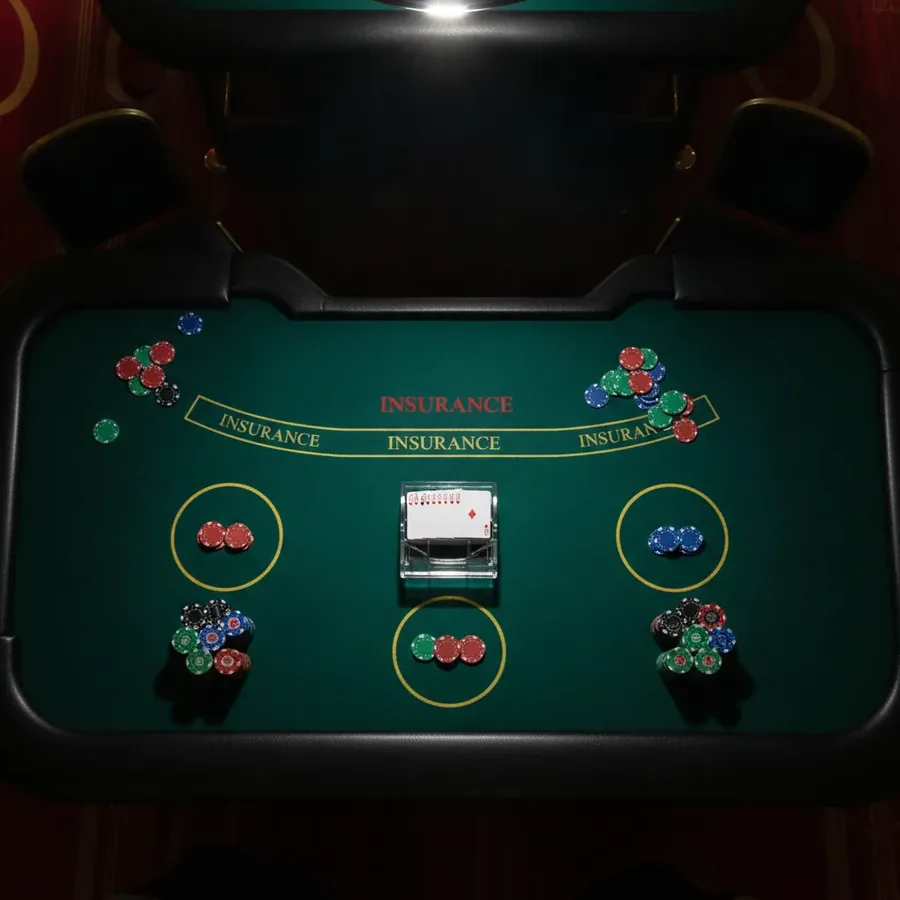
Side Bets Increase House Edge to 5 Percent
Infinite Blackjack offers four distinct side bets including Any Pair, 21+3, Hot 3, and Bust It, each carrying a substantially higher house edge than the main game. These additional wagers increase the overall cost of play because their independent odds are less favorable, effectively raising the average loss rate for players who consistently include them in their betting strategy.
The primary blackjack game maintains a respectable RTP of 99.47%, but adding side bets can push the combined house edge well above five percent depending on the specific bet selected. For instance, insurance bets typically carry a house edge around 7.47%, making them mathematically inferior choices for most strategic players who aim to minimize the casino's mathematical advantage over time.
Players should calculate the total exposure by combining the main stake with these optional wagers to understand the true risk per hour. Since side bets contribute differently to bonus turnover and have lower returns, limiting their frequency helps preserve bankroll longevity while still allowing occasional participation for entertainment purposes without compromising the core gameplay economics.
Which rule variants does the software show?
The software presents multiple blackjack variants such as Infinite Blackjack, Lightning Blackjack, and standard versions with varying deck counts and payout structures. Each variant displays specific parameters like dealer standing on soft 17 or hitting, which directly influence the house edge and require different strategic approaches from the player to optimize their decision-making process at the table.
Infinite Blackjack features an RTP of 99.47% and allows unlimited seats, while Lightning Blackjack adds multiplier mechanics with an RTP of 99.56%. These differences mean that the optimal basic strategy may shift slightly between tables, so players must adapt their decisions based on the specific rules and payout ratios displayed on the active game interface.
Blackjack Party by Evolution offers a party atmosphere with moderators but maintains standard payout structures that players need to evaluate carefully. The presence of different rule sets across providers means that a strategy effective in one environment might be suboptimal in another, necessitating a review of the specific table rules before committing significant funds to any single session.
Bust at 22: Stake Lost Immediately
While standard blackjack rules bust a hand at 21, some specific variants or side conditions might introduce unique losing thresholds that penalize the player immediately. In traditional games, exceeding 21 results in an automatic loss of the entire stake, a fundamental rule that applies universally across all standard and live dealer tables offered by major providers like Evolution.
If a variant introduces a bust threshold higher than 21, it would significantly alter the house edge, but standard tables maintain the strict 21 limit. Players must ensure they do not exceed this limit, as any card drawn that pushes the total over 21 triggers an immediate loss of the original wager regardless of the dealer's final hand outcome.
The house edge calculations provided in the data assume standard bust rules where 21 is the maximum valid score. Deviations from this norm are rare and usually associated with specific promotional games or unique studio rules, so players should always confirm the exact bust threshold before placing their initial bet to avoid unexpected losses.
Six Decks to Eight Decks in the Shoe
Most standard blackjack tables utilize six to eight decks, which increases the house edge compared to single-deck games due to reduced penetration and probability shifts. The transition from one deck to six decks adds approximately 0.48 percentage points to the house advantage, making multi-deck shoes less favorable for skilled players relying on basic strategy alone.
Infinite Blackjack operates with a continuous shuffle or large shoe setup, maintaining an RTP of 99.47% despite the higher deck count. This efficiency compensates for the increased number of cards, ensuring that the mathematical expectation remains competitive compared to older six-deck games that might suffer from higher edges due to restrictive rules.
Players should note that using more decks dilutes the effectiveness of card counting strategies and slightly worsens the odds for everyone. The difference between a six-deck game and an eight-deck game is marginal, typically around 0.02 percentage points, but both are significantly worse than single-deck variants if the payout structure remains constant at 3:2 for blackjacks.
Blackjack variants at a glance
| Variant | Payout | House edge | Rule | Bet range |
|---|---|---|---|---|
| Blackjack Auszahlung 6:5 statt 3:2 (6 Decks) | 98.15% | 1.85% | Ersatz von 3:2 durch 6:5 fügt exakt +1.39 Prozentpunkte zum Vorteil des Casinos hinzu – stärker als jede andere Regeländerung. Bei $10 Einsatz zahlt Blackjack $12 statt $15. | Blackjack 6:5, Gewinn 1:1 |
| Blackjack Insurance / Versicherung (6–8 Decks) | 92.53% | 7.47% | Separate Nebenwette bis 50% der Hauptwette, wenn der Dealer ein Ass hat. Basisstrategie schreibt IMMER Ablehnung vor (außer Karten zählen bei True Count ≥ +3). Bei einem Deck Vorteil ≈ 5.88% | Insurance 2:1 |
| Blackjack Ein Deck, klassische Regeln, 3:2 | 99.85% | 0.15% | Weniger Decks = niedrigerer Vorteil; ein Deck gibt ca. −0.48 Prozentpunkte gegenüber 8 Decks. Oft durch 6:5 Auszahlung kompensiert. | Blackjack 3:2, Gewinn 1:1 |
| Blackjack Split / Double / H17 – Regel-Effekte | n.a. (Regel-Modifikatoren) | H17 +0.22 Prozentpunkte; RSA −0.08 Prozentpunkte; DAS −0.14 Prozentpunkte | Dealer Hits Soft 17 verschlechtert RTP um 0.22 Prozentpunkte; Resplit Aces verbessert um 0.08 Prozentpunkte; Double After Split verbessert um ca. 0.14 Prozentpunkte; 6 Decks statt 8 – ca. 0.02 Prozentpunkte. | Double – Einsatz ×2 mit einer Karte; Split – bis 4 Hände; Ass-Split meist mit einer Karte. |
| Blackjack Liberal Vegas Strip (liberale Regeln, 3:2) | 99.72% | 0.28% | Günstigste Regelkombination: S17 + DAS + Resplit + Late Surrender. Standardabweichung 1,15 | Blackjack 3:2, Gewinn 1:1 |
| Blackjack Surrender (Late Surrender) – Regel-Effekt | n.a. (Regel-Modifikator) | −0.08 Prozentpunkte | Spieler gibt Hand nach Dealer-Blackjack-Prüfung auf, verliert die Hälfte des Einsatzes. Verbessert RTP um ca. 0.08 Prozentpunkte. Early Surrender ist wesentlich wertvoller (bis −0.6 Prozentpunkte), aber extrem selten. | Rückzahlung 50% des Einsatzes |
Splitting costs double bet: plan budget
Blackjack Split allows players to divide a pair into two separate hands, effectively doubling the initial wager for each new hand. This mechanic requires a second bet equal to the first, immediately increasing the total risk exposure per round by one hundred percent. Players must ensure their bankroll can sustain this doubled outlay before initiating any split action during a session.
The Resplit Aces rule improves the Return to Player by 0.08 percentage points compared to standard restrictions on splitting aces. However, this benefit is often offset by the requirement to place additional bets when multiple splits occur in a single hand. The mathematical advantage remains marginal against the increased capital requirement of managing up to four simultaneous active hands.
Double After Split permits doubling down on cards received after a split, adding approximately 0.14 percentage points to the player's edge. This rule enhances the value of split hands but demands strict adherence to basic strategy to avoid unnecessary losses. Ignoring optimal play negates the theoretical benefit while still requiring the doubled bet placement for every qualifying card.
Set session stop after 30 percent loss
The House Edge for Insurance stands at 7.47%, significantly higher than the main game's base rate of 0.28% for liberal rules. Accepting insurance increases the total wagered amount by fifty percent of the original stake, accelerating potential losses during losing streaks. A thirty percent loss threshold protects capital from being depleted by these high-margin side bets offered when the dealer shows an ace.
Standard deviation of 1.15 indicates moderate volatility in Blackjack Liberal Vegas Strip games where payouts follow the favorable 3:2 ratio. High variance sessions can quickly erode a bankroll if the stop-loss limit is not enforced strictly at the thirty percent mark. Mathematical discipline prevents emotional decisions that ignore the statistical reality of long-term negative expectation without strict bankroll management.
Dealer Hits Soft 17 worsens the RTP by 0.22 percentage points compared to standing on soft seventeen, increasing the house advantage. This rule change compounds with other unfavorable conditions like six-deck shoes which add roughly 0.02 percentage points to the edge. Setting a hard stop at thirty percent loss prevents the cumulative effect of these small edges from draining the account entirely.
Live Table vs RNG Table: Speed and Limits
Infinite Blackjack offers betting limits ranging from 1 to 5,000 EUR with an RTP of 99.47% and unlimited player seats. The live format introduces human interaction and physical card dealing, which slows the number of hands processed per hour compared to RNG versions. This slower pace reduces the total amount wagered over time, potentially preserving a bankroll longer than faster automated tables allow.
Lightning Blackjack features multipliers up to 25x on winning hands but maintains a slightly lower RTP of 99.56% within the 1 to 2,500 EUR limit range. The live dealer environment creates a distinct pacing difference from digital random number generator tables, affecting the velocity of bonus turnover requirements. Players must account for this speed differential when calculating how many hours are needed to clear wagering obligations efficiently.
Blackjack Party operates with limits between 1.00 and 1,000 EUR, featuring two moderators to create a party atmosphere distinct from standard live tables. The specific entertainment style does not alter the underlying mathematics but influences the perceived speed of play due to host interactions. Comparing these live variants reveals that higher limits often correlate with slower gameplay, impacting the efficiency of clearing bonus funds.
Blackjack Contributes Only 10 Percent to Wagering
Tischspiele contribute only ten percent toward the wagering requirement, whereas Slots contribute one hundred percent to meeting the same obligation. This discrepancy means that every euro wagered on blackjack counts as merely ten cents toward the required turnover volume. Players relying solely on table games must therefore wager ten times more money to achieve the same clearance status as slot players.
The welcome bonus offers three hundred percent up to two thousand euros plus one hundred free spins, creating substantial turnover targets. If a player wagers five hundred euros on blackjack, only fifty euros count toward the requirement, leaving four hundred and fifty unrealized. This penalty structure makes table games inefficient for clearing bonuses unless the player intends to lose the remaining ninety percent contribution.
Insurance bets pay 2:1 but carry a house edge of 7.47%, making them particularly costly when contributing minimally to wagering progress. Since the main game only adds ten percent, the combined effect of poor odds and low contribution accelerates bankroll depletion without progress. Strategic avoidance of insurance becomes critical to preserve the limited effective value generated by each wager placed on the felt.
Blackjack Insurance contributes ten percent just like the main hand, yet its seven point four seven percent house edge destroys value rapidly. Every fifty euros wagered on insurance generates only five euros of turnover credit while statistically returning forty-six euros to the house. This dual penalty ensures that accepting insurance during bonus play is mathematically disastrous for both bankroll preservation and bonus clearance.
16 vs 10 played incorrectly: most common error
Playing a hard sixteen against a dealer ten incorrectly leads to significant expected value loss compared to following strict basic strategy guidelines. Deviating from optimal play increases the effective house edge beyond the standard 0.46% found in games with six decks and soft seventeen rules. Each incorrect decision compounds the disadvantage, turning a manageable deficit into a rapid erosion of the player's available funds.
Basic strategy dictates surrender or hit in specific scenarios rather than standing, which is a common mistake among novice players facing a dealer ten. Standing on sixteen yields a lower win probability than hitting, directly reducing the return to player from the theoretical 99.54% baseline. Adhering to established charts ensures the player maximizes their chances within the constraints of the game's mathematical structure.
The impact of incorrect play magnifies when combined with the ten percent contribution rule for table games toward bonus wagering requirements. Mistakes not only increase immediate losses but also slow down the accumulation of eligible turnover needed to unlock withdrawal rights. Efficient play minimizes the house edge, ensuring that the limited contribution percentage works as effectively as possible against the casino's advantage.
Continuous Shuffling Machine shuffles after each round
Infinite Blackjack from Evolution employs a Continuous Shuffling Machine that reshuffles the deck immediately following every single completed hand, ensuring that card counting strategies become mathematically impossible for any player attempting to gain an edge over the house. This specific mechanical process maintains a steady state of randomness across all betting rounds without requiring manual intervention or pauses between deals for physical card handling by the dealer staff members.
The Infinite variant accommodates an unlimited number of concurrent players at the virtual table while offering stake limits ranging from 1 EUR up to 5,000 EUR per round, which allows high rollers to place substantial wagers alongside casual participants who prefer lower minimum entry fees for entertainment purposes only.
Consequently, players cannot track previous outcomes to predict future cards because the continuous mixing resets probability distributions after each deal, effectively eliminating any potential advantage derived from observing historical card sequences during extended playing sessions on this particular live dealer platform interface available online.
Ignored Basic Strategy Chart: 1 Percent Wasted
Playing Liberal Vegas Strip rules with Soft 17, Double After Split, and Resplit Aces yields a house edge of just 0.28 percent when utilizing perfect basic strategy, but ignoring these mathematical guidelines increases the casino's advantage significantly beyond this optimal baseline figure for long-term play.
For instance, deviating from the recommended moves in games like Lightning Blackjack, which features multipliers up to 25x on winning hands, can waste approximately one percent of expected return over time due to suboptimal decision-making regarding hits, stands, doubles, or splits during active gameplay rounds.
This statistical erosion means that a player betting 100 EUR repeatedly might lose an extra 1 EUR compared to strategic play, turning a theoretically favorable 99.72% RTP into a less profitable outcome that diminishes overall bankroll sustainability over thousands of hands played.
Bonus conditions often exclude Blackjack completely
The standard terms for the 300% welcome bonus up to 2,000 EUR frequently stipulate that table games such as Blackjack contribute only 10% toward the wagering requirement, whereas slots contribute 100%, making it extremely difficult to clear the bonus through traditional card game strategies alone.
If a player attempts to meet the rollover using Blackjack Party from Evolution, where stakes range from 1,000 EUR down to minimal amounts, only ten percent of each wager counts toward the total turnover needed to unlock withdrawal rights, severely limiting viable clearing paths.
Therefore, relying on live dealer tables like Infinite Blackjack with its 99.47% RTP is inefficient for bonus conversion since the low contribution rate forces players to bet ten times more volume than slot enthusiasts, increasing exposure to variance and potential losses before cashout eligibility.
Bonus Lost Due to 10 Percent Contribution
When converting the 2,000 EUR bonus via table games contributing merely 10%, a player must generate 40,000 EUR in total turnover to satisfy the typical x20 wagering requirement attached to such promotional offers, assuming no other restrictions apply to the specific bonus tier selected initially.
Contrast this with slots contributing 100%, where the same 2,000 EUR bonus would require only 2,000 EUR in turnover, highlighting a twenty-fold increase in required betting volume when choosing Blackjack variants like Lightning Blackjack with its 99.56% RTP instead of high-volatility slot machines.
This disparity implies that spending 40,000 EUR on blackjack bets carries a much higher risk of busting the bankroll before completing the terms, as even a slight house edge compounds over such massive volumes compared to the faster, albeit riskier, path through eligible slot titles.
Ace Split: only one card per hand
Most standard Blackjack rules, including those found in classic single-deck variants with a 0.15% house edge, restrict players to receiving only one additional card after splitting Aces, preventing further doubling or re-splitting actions that could otherwise improve expected value calculations significantly during complex hand scenarios.
While some liberal versions allow resplitting Aces to improve RTP by 0.08 percentage points, the common restriction limits post-split potential, forcing players to accept whatever two-card total they receive rather than building stronger three- or four-card combinations against the dealer's final upcard.
This limitation reduces the strategic flexibility available to skilled players, meaning that even if they correctly split pairs, their ability to capitalize on favorable situations remains curtailed compared to games offering more generous splitting policies, thereby impacting long-term profitability expectations.
Contact
+442080595246
[email protected]
Live - online chat
Banking









Providers












i24slots Casino 2024